Transformer Oil Containment Basins – Safe Storage and Transport for Industrial Applications
Industrial companies rely on transformers as essential components of their power supply infrastructure. Whether installed in production halls, data centres or technical utility areas, the safe handling of transformer oil is crucial for environmental and operational safety. A transformer oil containment basin ensures that leaks are safely collected and helps operators meet applicable legal requirements. At the same time, it protects companies against financial and legal risks. The following article examines the key requirements, applications and benefits for industrial operators.
Why Oil Containment Basins Are Essential for Transformers
Environmental Risks Associated with Transformer Oil
Transformer oil is generally classified as a substance hazardous to water and can cause significant damage to soil and groundwater if released. Even minor leaks can result in environmental compliance issues. In industrial facilities with sensitive production areas, escaped oil can also lead to long-term contamination. Cleaning up such damage is costly and time-consuming. An oil containment basin prevents oil from entering the environment uncontrollably. It is therefore a key element of preventive environmental protection.
Liability and Operational Risks for Industrial Companies
Without suitable oil containment measures, operators face considerable liability risks. In the event of an incident, companies may be held responsible for environmental damage and consequential losses. Additional consequences may include fines, regulatory requirements or even production downtime. In the event of a claim, insurance companies also examine whether appropriate technical protective measures were in place. A properly designed oil containment basin significantly reduces these risks. It improves operational compliance and helps protect ongoing operations.
Prevention Instead of Damage Control
In industrial practice, prevention is more economical than dealing with damage after it has occurred. Oil containment basins make it possible to detect leaks at an early stage and manage them in a controlled manner. This allows maintenance work to be planned effectively without abruptly interrupting operations. They also help protect adjacent equipment and floors. Preventive measures are viewed positively by regulatory authorities and auditors. An oil containment basin is therefore an important part of a sustainable industrial plant concept.

Legal Requirements and Regulatory Framework
AwSV and WHG as the Legal Basis
In Germany, the Federal Water Act (WHG) and the Ordinance on Installations for Handling Substances Hazardous to Water (AwSV) regulate the use of oil containment basins. Due to their oil content, transformers frequently fall within the scope of these regulations. Industrial companies are required to provide suitable containment systems where applicable. Compliance with these requirements is subject to regular inspections. Violations can result in significant legal consequences. A suitable oil containment basin helps ensure compliance with the applicable regulations.
Containment Capacity and Leak-Tightness Requirements
As a general rule, the required containment capacity must be sufficient to retain the relevant volume of transformer oil in accordance with the applicable regulatory requirements. In addition, many operators specify an additional safety margin. Long-term leak-tightness is equally important. Weld seams, material quality and surface coatings all play a key role. Leaking or damaged containment basins may no longer meet the applicable requirements. Professional design and assessment are therefore essential.
Operator Responsibilities
The industrial company is responsible for selecting and operating a suitable oil containment basin. This includes regular visual inspections and maintenance. The suitability of the containment basin must also be reassessed whenever the transformer or its installation location is modified. Operators are required to rectify any defects without delay. Complete documentation improves legal certainty. This makes the oil containment basin an integral part of the company’s environmental management system.
Oil Containment Basins for Transformer Storage
Fixed Containment Basins for Indoor and Outdoor Applications
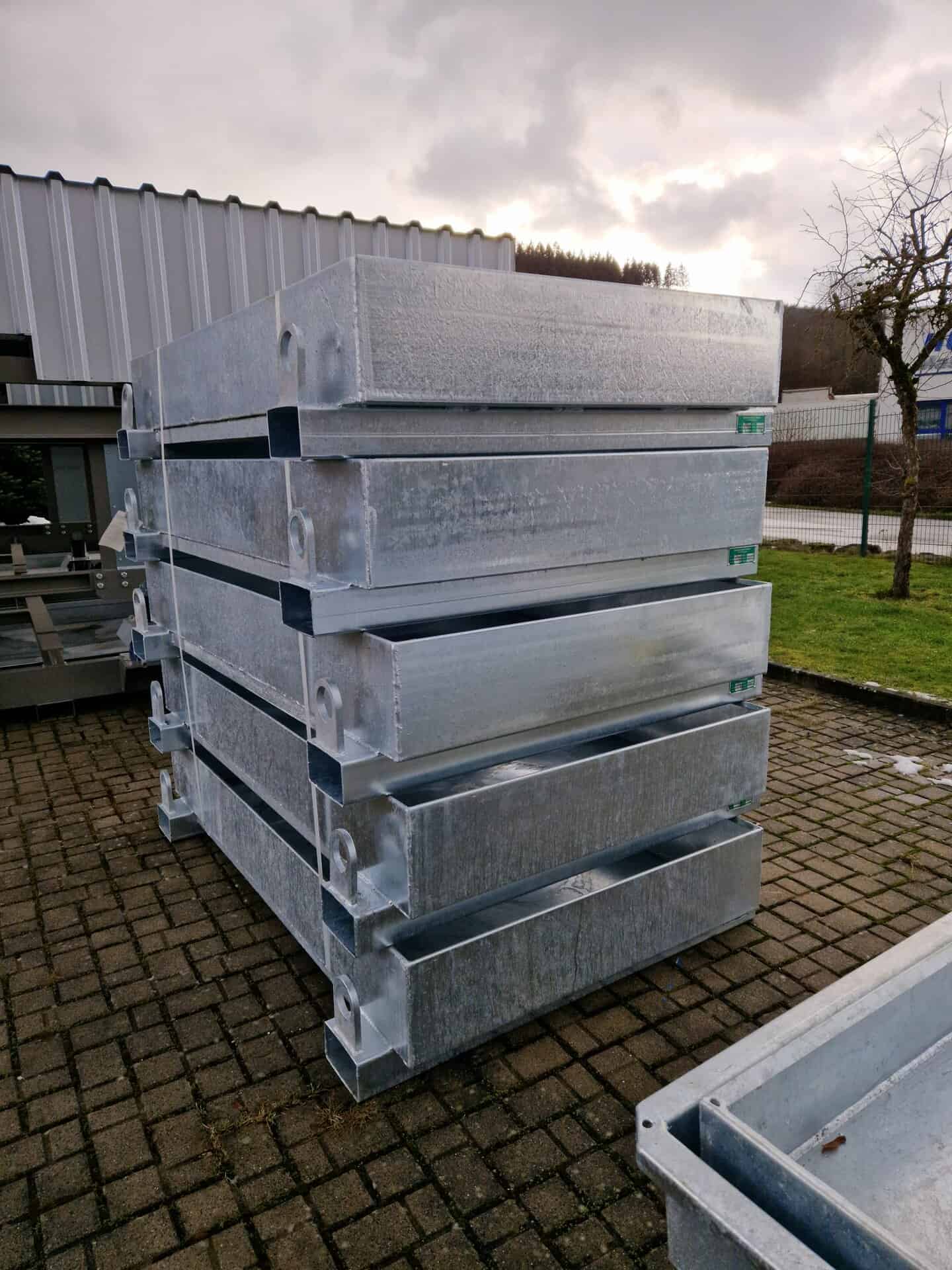
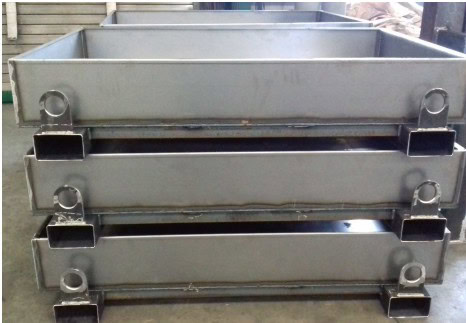
Fixed oil containment basins are generally used for the permanent installation of transformers. These are often made of steel and permanently installed at the designated location. Indoors, they help maintain clean and safe working conditions. Outdoors, they protect soil and groundwater against contamination. Grating systems provide a stable surface for positioning the transformer. Fixed solutions offer high stability and long-term protection.
Corrosion Protection and Material Selection
Industrial environments place high demands on materials and surface finishes. Oil containment basins must withstand corrosion, weather conditions and chemical influences. Protective coatings or galvanising can significantly extend their service life. Stainless steel may also be suitable for particularly aggressive environments. Choosing the right material helps reduce maintenance costs while improving operational safety over many years.
Integration into Existing Installations
Many industrial companies operate transformers within existing facilities. Oil containment basins can also be retrofitted to existing installations. Modular designs make it easier to adapt them to available space. This often avoids extensive structural modifications. Retrofitting immediately improves environmental and operational protection and can be an economical solution for existing installations.
Oil Containment Basins for Transformer Transportation
Mobile Solutions for Internal Transportation
Transporting transformers within industrial facilities involves an increased risk of oil leakage. Mobile oil containment basins provide flexible protection in these situations. They are designed for temporary applications and can be positioned as required. Despite their mobility, they must be capable of supporting substantial loads. A robust construction is therefore essential. Mobile solutions are a useful complement to fixed containment systems.
Safety During Maintenance and Servicing
Transformer oil can also escape during maintenance and servicing work. Oil containment basins provide a protected working area for maintenance teams. They prevent oil from spreading uncontrollably across the floor, helping to reduce accident risks. At the same time, work areas remain clean and properly organised, making it easier to comply with internal safety standards.
Reducing Liability and Environmental Risks
Transportation and temporary storage involve particular risks. Oil containment basins help reduce these risks by providing protection against unexpected leaks during handling. This helps industrial companies minimise potential liability claims. Environmental protection is also maintained during temporary operations, which is particularly important on construction sites or during refurbishment projects.
Early warning signs of transformer oil leaks are often overlooked in everyday operations because they may initially appear insignificant. Typical indications include a slightly oily film on the containment basin, dark dust deposits around sealing points or an unusual smell in the vicinity of the transformer.
A gradual increase in the liquid level in the containment basin after periods of rainfall may also indicate minor leaks. Small discolourations on the floor or grating are often dismissed as dirt, but they can be important warning signs. Recognising these indications at an early stage helps prevent more serious damage and allows appropriate action to be taken.
The 3 Key Benefits at a Glance
Operational Safety: Preventive protection minimises downtime, liability risks and costs.
Regulatory Compliance: Oil containment basins play an essential role in meeting WHG and AwSV requirements.
Environmental Protection: They help prevent contamination of soil and water