Preventing Environmental Damage from Emulsions: Spill Containment Sumps as a Safe Solution for Industrial and Commercial Applications
What Are Emulsions and Where Are They Generated?
Emulsions are finely dispersed mixtures of two liquids that do not normally mix – usually water and oil.
They are generated as by-products in industrial processes such as metalworking, cooling and cleaning. They may contain residues of lubricants, cutting oils or cleaning agents that can be hazardous to the environment.
Depending on their composition, emulsions may even be classified as hazardous waste. It is therefore essential to implement suitable measures for their handling and disposal at an early stage.
Businesses that work with emulsions must be aware that even small quantities can cause significant environmental damage if released into the environment.

- Emulsions consist of immiscible liquids (usually water and oil) and are often generated as by-products of industrial processes such as metalworking, cooling and cleaning.
- They may contain substances hazardous to the environment, such as lubricants, cutting oils or cleaning agents, and may be classified as hazardous waste depending on their composition.
- Responsible handling and proper disposal are essential, as even small quantities of emulsions can cause significant environmental damage if released into the environment.
Environmental Damage Caused by Improper Handling
Improperly disposed of emulsions can easily enter groundwater or drainage systems. This can lead to long-term contamination that is costly and difficult to remediate. Emulsions containing toxic or non-biodegradable additives are particularly problematic. These substances can render soil unusable and harm aquatic life.
Businesses that neglect the safe handling of emulsions risk causing serious environmental damage and may also face legal consequences. Preventing such substances from entering the environment should therefore be a top priority – not only from a legal perspective, but also as a matter of ethical responsibility.

Legal Requirements for the Protection of Soil and Water
In Germany, the Federal Water Act (WHG) governs the handling of substances hazardous to water, including emulsions.
Businesses must implement technical measures to prevent these substances from entering water bodies or the soil. These include spill containment systems such as sumps, which prevent liquids from spreading in the event of a leak.
Compliance with these regulations is mandatory and is regularly monitored by the relevant authorities.
Companies that fail to meet these requirements risk fines or even operational shutdowns.
Preventing environmental damage through the use of suitable containment systems therefore makes sound economic sense as well.
Spill Containment Sumps as a Key Safety Measure
Design and Function of Spill Containment Sumps
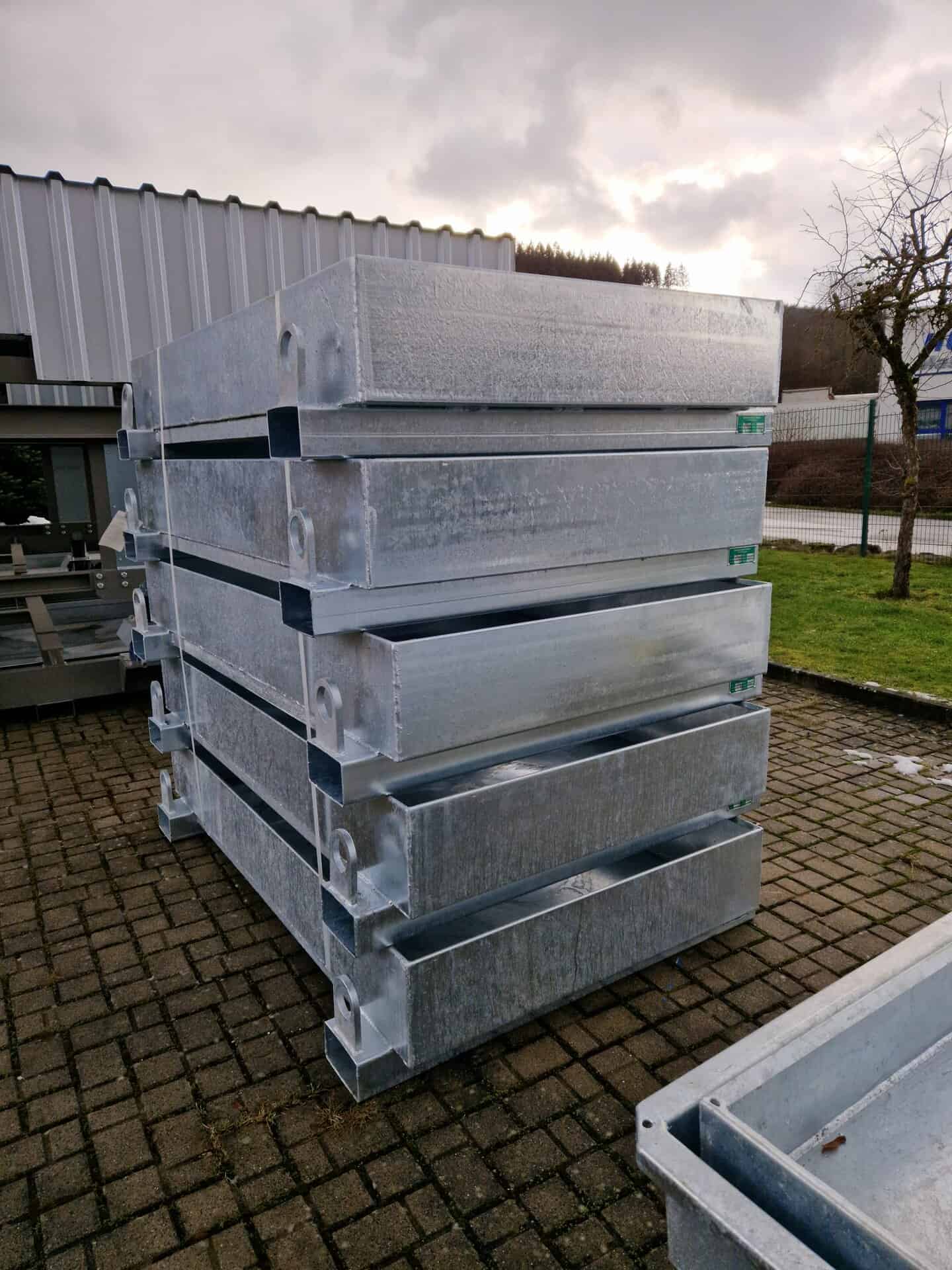
Spill containment sumps are shallow, robust containers positioned beneath machinery or storage units. They safely collect escaping liquids, such as emulsions, before they can harm the environment. Many models feature grating inserts that prevent containers from standing directly in the collected liquid. This helps maintain a clean and safe working environment.
Depending on the application, the sumps can be used as mobile or stationary units. They can also be combined with pallets or tanks, providing additional safety in storage and production areas

Chemical Resistance as a Key Selection Criterion
Not every spill containment sump is suitable for every type of emulsion. Resistance to oils, acids and alkalis must be ensured. Materials such as polyethylene, stainless steel and galvanised steel are commonly used for this purpose.
Before purchasing, businesses should carefully analyse the emulsions used in their operations. This is the only way to select the appropriate material. Choosing the wrong material can result in damage to the sump itself, causing it to lose its protective function.

Applications in Industry and Skilled Trades
Spill containment sumps are useful in virtually every industrial sector:
- From metalworking
- To workshops
- Through to the chemical industry
They are essential wherever lubricants, oils or coolants are used.
Small businesses can also demonstrate their environmental responsibility by implementing such systems.
Depending on the industry, these solutions can be adapted or expanded to meet specific requirements.
This makes it possible to create customised solutions for businesses of different sizes and with varying operational needs.

Sustainability and Operational Benefits
Reducing Risks and Subsequent Costs
Environmental damage can quickly result in significant costs – from clean-up operations to legal disputes. Spill containment sumps help minimise these risks before they arise. The investment is relatively modest, while the long-term benefits can be substantial. Insurance premiums may also be lower when appropriate safety measures can be demonstrated.
Businesses that take a preventive approach benefit in two ways: through cost savings and an improved corporate image.
Supporting Sustainable Waste Management
When emulsions are collected separately, they can be sorted by type and disposed of correctly. This provides the basis for recycling or proper disposal. Spill containment sumps prevent substances from mixing uncontrollably or becoming contaminated with other waste materials. They therefore promote not only safety but also the circular economy.
In this way, environmental protection becomes an integral part of everyday business operations.
Meeting Audit and Certification Requirements
Many businesses aim to obtain environmental certifications such as ISO 14001. The use of spill containment sumps demonstrates a commitment to meeting statutory requirements and voluntary standards. This is important not only for regulatory inspections but also for customer audits and supplier assessments.
Documented environmental safety measures enhance a company’s reputation and strengthen its competitiveness. Businesses with effective measures in place can gain a clear advantage in the market

Practical Implementation in Business Operations
Integration into Existing Workflows
Selecting and Sizing the Right Spill Containment Sump
The right sump must not only be compatible with the emulsion being used but also have sufficient capacity to collect the potential volume of any leakage. A sump that is too small will not provide adequate protection, while one that is too large may be impractical. Digital tools or advice from the manufacturer can help with the selection process. It is also important to consider whether a mobile or stationary solution is more suitable.
Don’t Overlook Maintenance and Inspections
Spill containment sumps also require proper care. They should be inspected regularly for leaks and damage. Regular cleaning helps prevent the materials from being adversely affected. Particular care is required when handling aggressive emulsions.
Taking these precautions helps extend the service life of the equipment and ensures that its protective function is maintained over the long term.