
Safe Container Storage in a Limited Space – Mobile Container Shelter with Spill Containment Trays Compliant with German AwSV Requirements
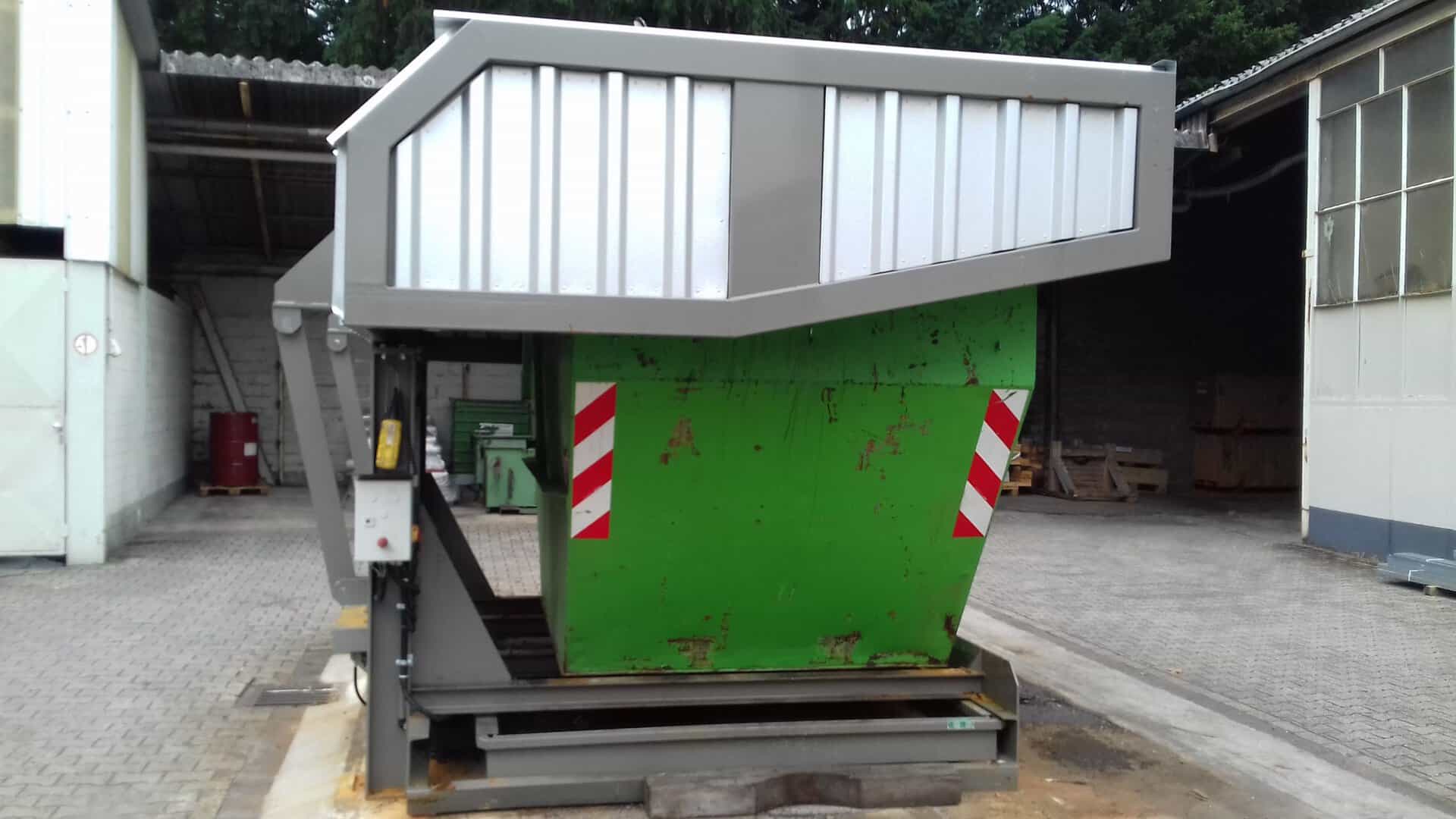
At ANDRITZ Küsters GmbH, a CONSTELLMAT NCQ 70 HS is in operation. The system is installed in an existing courtyard, where it fits seamlessly into the surrounding operational environment.
The compact design of the NCQ 70 HS makes efficient use of the available space and provides a clearly designated storage area for the container. At the same time, its covered design ensures reliable protection for the container stored underneath.
This creates a structured and safe container storage solution, even within an existing operational area, without the need to construct a separate container shelter.
The NCQ 70 HS demonstrates how existing space can be used effectively and how container storage areas can be functionally integrated into everyday operational processes.
Objective: Creating a Clear Structure for Material Flows
The aim was to organise outdoor waste disposal in such a way that:
- Materials are stored safely and in compliance with applicable legal requirements
- A clearly designated storage area is provided for collection containers
- Transport distances are reduced and processes simplified
- Container exchanges can be carried out smoothly
- The appearance of the company premises is improved
- Groundwater is protected
At the same time, the solution needed to integrate easily into existing production processes.
Solution: An Organised Storage Area for Skip Containers – NCQ 70 HS
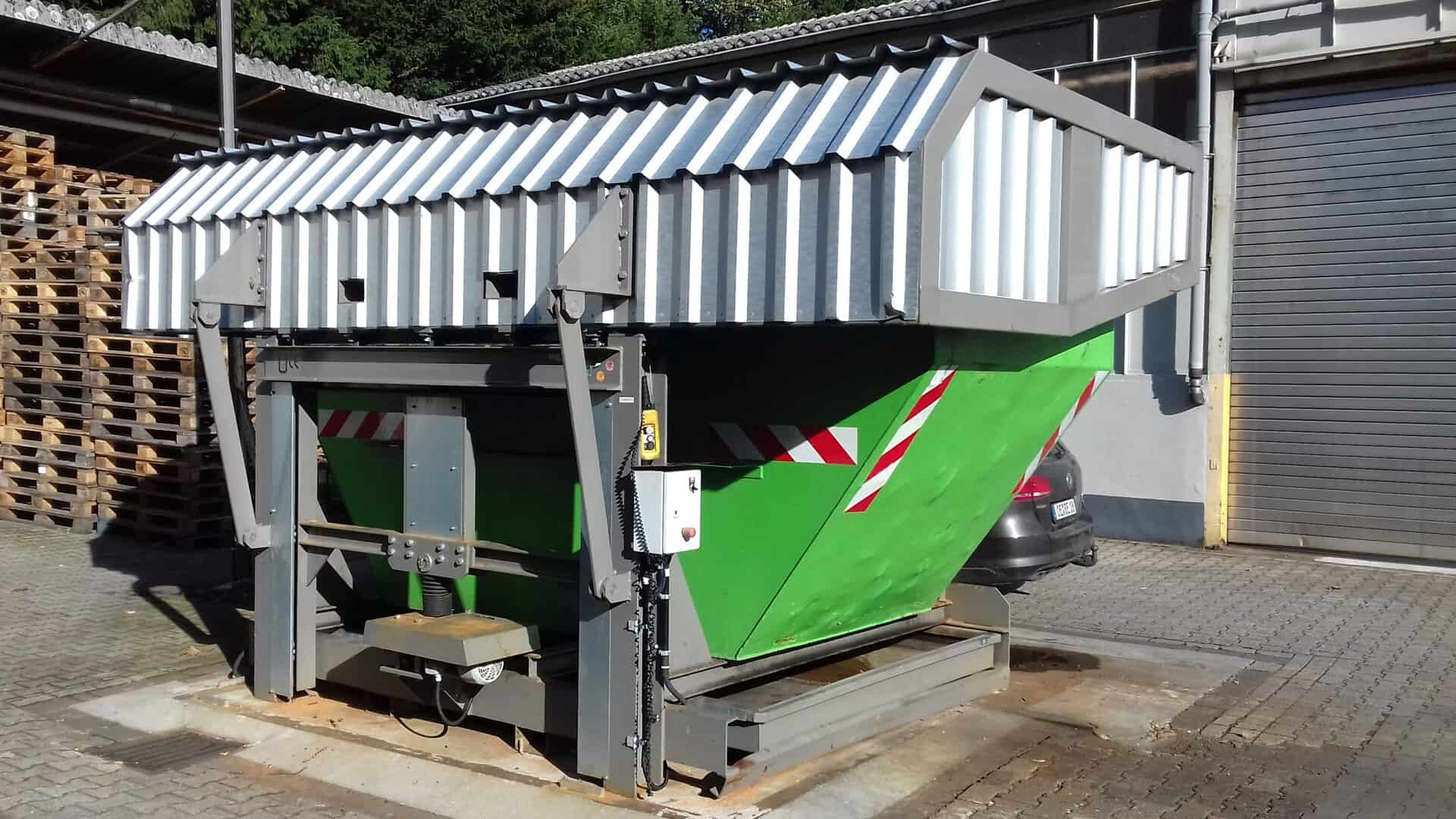
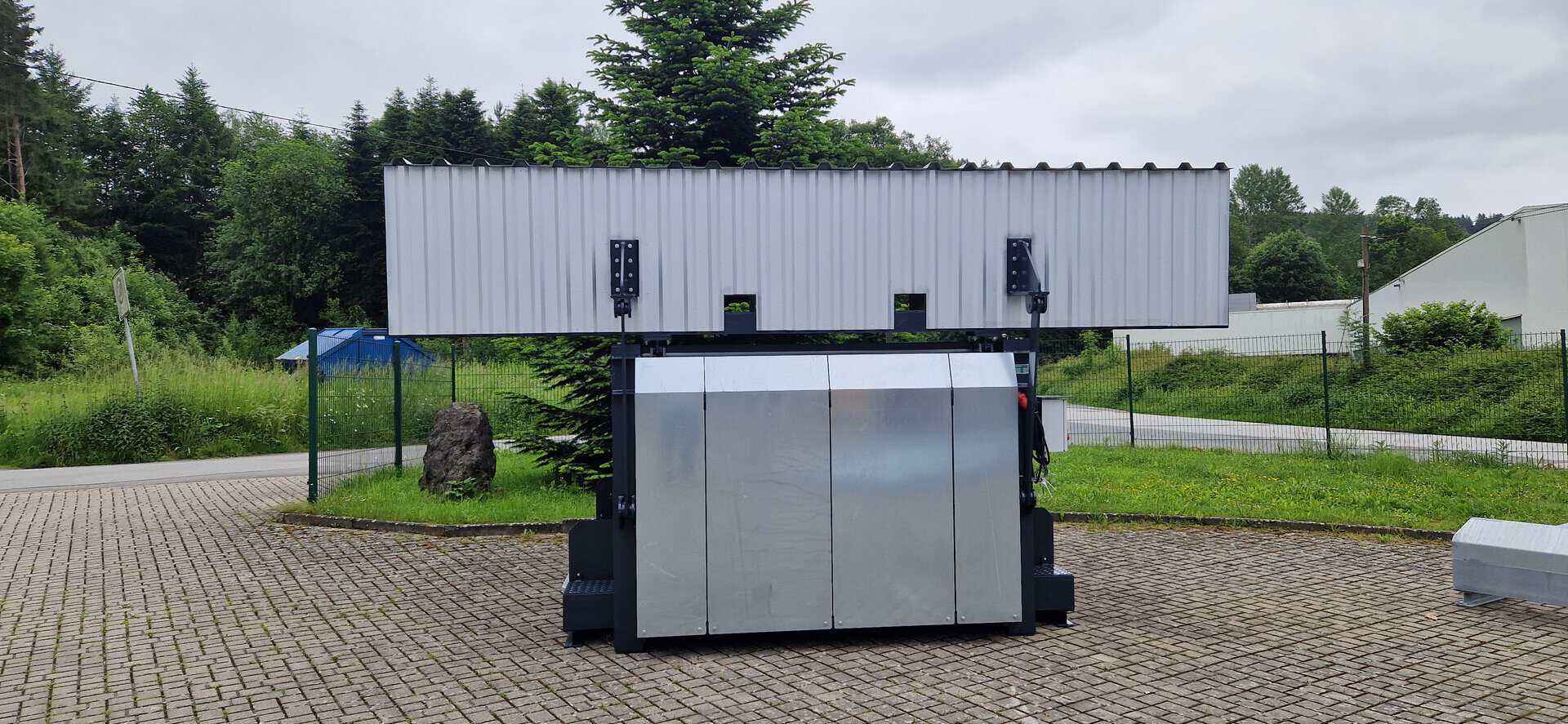
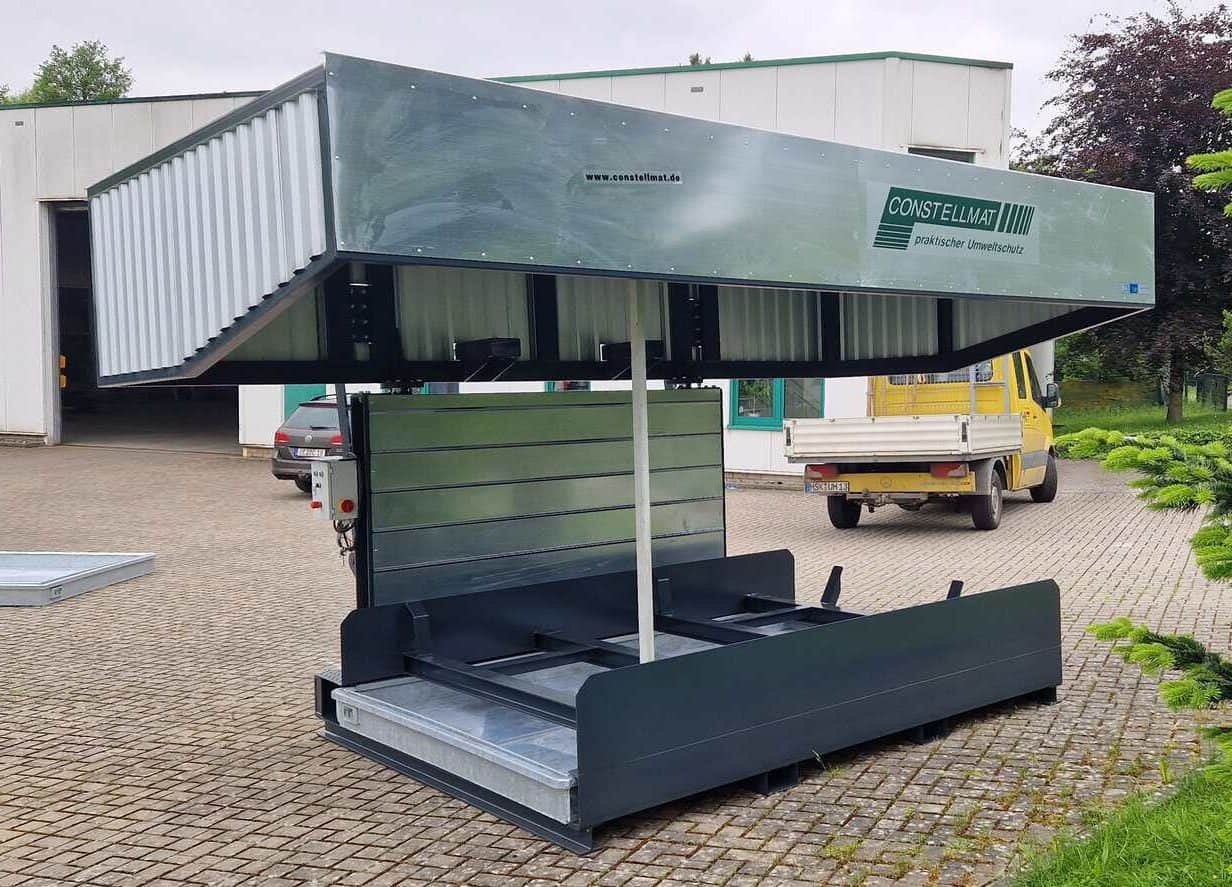
The NCQ 70 HS container storage system was installed to implement the solution. It was specifically developed for industrial waste disposal areas and allows containers to be loaded from both the front and the side.
The clearly organised layout enables materials to be collected in a targeted manner and efficiently prepared for subsequent recycling or disposal. The stored materials are also protected against theft.
A key feature of the system is its robust construction. It provides a stable, load-bearing working platform and ensures that the container in use is safely positioned – even when handling large quantities of material.
Integration into Existing Operational Processes
The system was positioned outdoors on the company premises, creating a clearly designated waste disposal area.
Loading takes place directly from the production area using a forklift and tipping skip. This keeps transport routes clear and simplifies operational processes.
Another advantage is the easy access for waste collection vehicles. Container exchanges can be carried out quickly, allowing full containers to be collected and replaced efficiently.
Results: Organised Processes and Efficient Material Flow
The implementation has created a clearly structured waste disposal process:
- Clean and organised storage of production waste and recyclable materials
- Clearly designated storage area for metal chips
- Shortest possible transport routes within and outside the facility
- Smooth container exchanges directly in front of the production hall
- No interruptions to production processes
This creates a stable and efficient material flow throughout the facility.
Conclusion: Structured Waste Disposal as the Foundation for Efficient Processes
This project demonstrates how previously unstructured outdoor waste disposal processes can be specifically improved.
The clearly designated storage area provides a practical and sustainable solution for industrial waste disposal requirements.
Frequently Asked Questions About This Reference Project
Which companies would benefit from a similar solution?
Structured outdoor waste disposal is particularly beneficial even when a company handles one material stream and needs to optimise its day-to-day waste management processes.
Does the company’s entire waste disposal process need to be redesigned?
No. In many cases, existing processes can be maintained and specifically improved by creating clearly designated areas and introducing a more structured layout.
How customised can such a solution be?
The solution is generally tailored to the existing conditions at the facility, taking into account factors such as available space, material types and internal operational processes.
How can you identify when improvements are needed?
Typical signs include unclear responsibilities, poorly organised collection areas and increased coordination efforts in day-to-day operations.
How is a project like this implemented in practice?
As a rule, the existing situation is first analysed before a structured solution is developed that can be integrated into the company’s existing operational processes.
