
LSV Lech-Stahl Veredelung: Organised Metal Chip Disposal with a Proven Container Storage Solution
Clear Processes for Smooth Material Flow
LSV Lech-Stahl Veredelung GmbH, based in Landsberg am Lech, is one of the leading manufacturers of high-quality bright steel products. Steel processing generates metal chips every day, which need to be reliably collected, transported and stored in compliance with applicable legal requirements. Short transport routes, clearly defined processes and well-organised operations are essential.
To make its waste disposal process more efficient, LSV has relied on covered CONSTELLMAT container storage systems for many years. This solution ensures a structured material flow between production, temporary storage and disposal, and has proven its value in everyday operations over the long term.
The Challenge
Metal chips take up valuable space and need to be regularly removed from the production area. At the same time, high standards must be met in terms of safety, environmental protection and the organisation of material flows.
The aim was to find a solution that:
- Creates a clearly designated area for the collection and storage of metal chips
- Simplifies waste disposal logistics
- Enables short transport routes
- Makes container exchanges more efficient
- Can be permanently integrated into existing production processes
The Solution
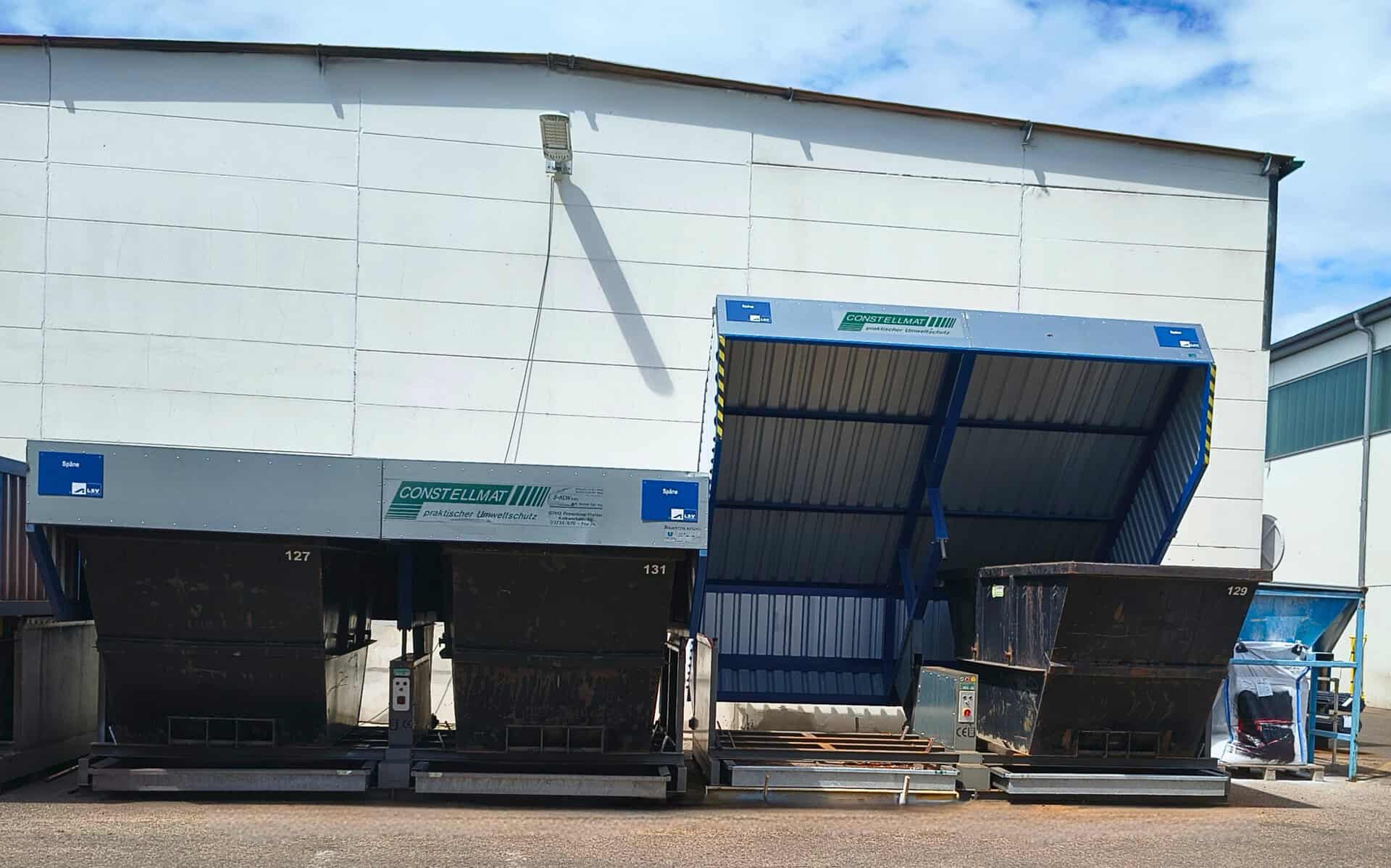
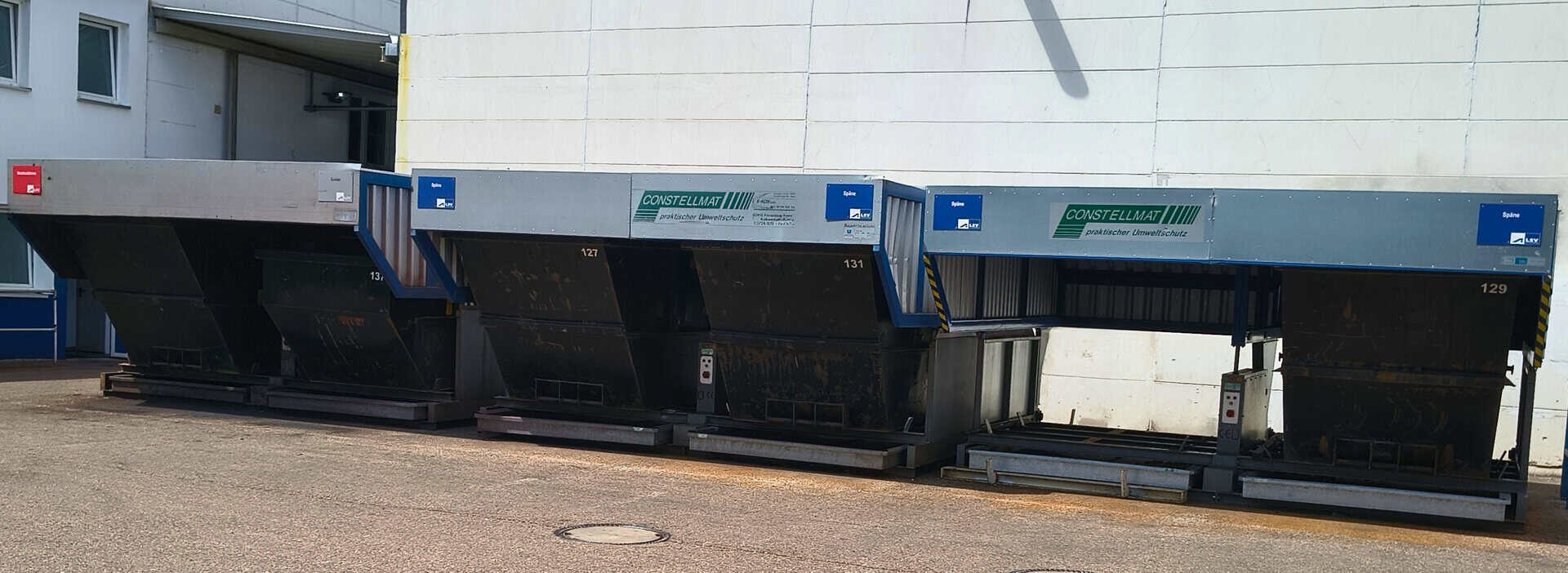
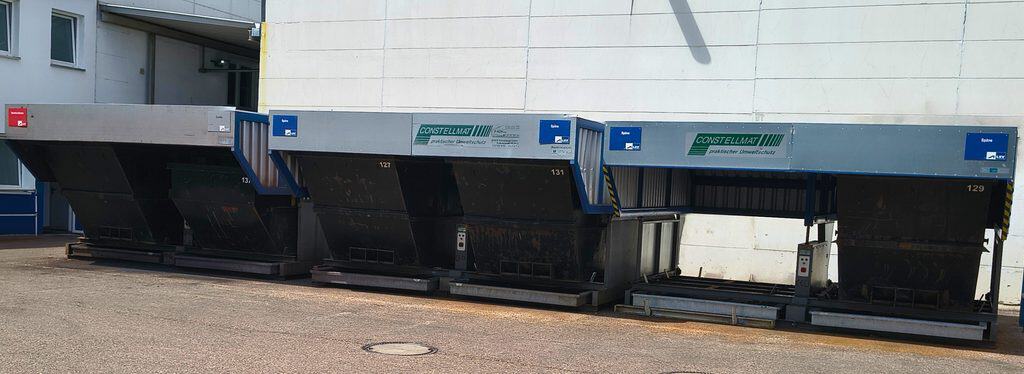
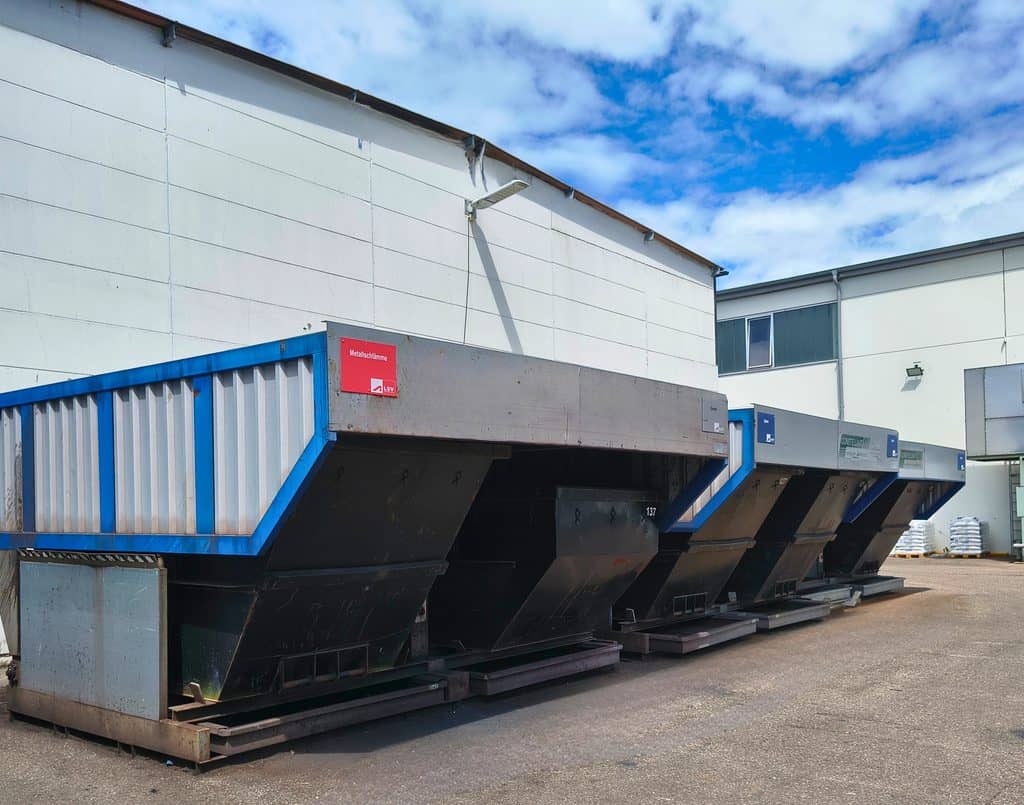
Three CONSTELLMAT NCLD 100 HS container shelters were installed on the company premises. The systems form a central waste disposal area and provide designated storage spaces for the containers in use.
Loading takes place directly from the production area using a forklift and tipping skip. This allows the metal chips generated during production to be transferred directly into the designated collection containers without additional process steps. At the same time, the area remains clearly organised and easily accessible to waste collection vehicles at all times.
Proven in Everyday Operation
CONSTELLMAT container storage systems have been an integral part of LSV’s waste disposal logistics for more than ten years. Clearly designated storage areas and direct access from production have helped establish an efficient and reliable process.
Today, the company benefits from:
- Structured and clean storage of metal chips
- Short transport routes between production and the container storage area
- Smooth container exchanges
- Easy access for waste collection vehicles
- A tidy and professional appearance of the waste disposal area
Richard Funk, Maintenance Team Leader at LSV Lech-Stahl Veredelung GmbH’s Oberndorf am Lech site, confirms:
“The solution has been working reliably for many years and fits well with our operational processes. The clearly designated storage areas and the straightforward organisation of container exchanges make handling the metal chips generated every day much easier.”
Conclusion
Our solution for LSV demonstrates how carefully planned infrastructure can make waste disposal processes more efficient. The covered container storage systems provide a durable solution that supports everyday operations, creates clear structures and makes an important contribution to smooth production processes.
Frequently Asked Questions About This Reference Project
Which companies would benefit from a similar solution?
Structured outdoor waste disposal is particularly beneficial even when a company handles one material stream and needs to optimise its day-to-day waste management processes.
Does the company’s entire waste disposal process need to be redesigned?
No. In many cases, existing processes can be maintained and specifically improved by creating clearly designated areas and introducing a more structured layout.
How customised can such a solution be?
The solution is generally tailored to the existing conditions at the facility, taking into account factors such as available space, material types and internal operational processes.
How can you identify when improvements are needed?
Typical signs include unclear responsibilities, poorly organised collection areas and increased coordination efforts in day-to-day operations.
How is a project like this implemented in practice?
As a rule, the existing situation is first analysed before a structured solution is developed that can be integrated into the company’s existing operational processes.
